Roof Leak Repair in Frog Hollow from $400. $400 to $1,400 for most leaks, and the entry point is rarely above the stain. Free inspection and a written quote.
Before anything else, establish whether this is a roof leak at all. On low-lying ground close to tidal water, moisture coming through a wall reads as a roof leak from inside and is not one. A roof survey that finds nothing is useful information rather than a wasted visit.
Most leak repairs in New Jersey land between $400 and $1,400, and a small isolated one is $400 to $900. Where that money goes wrong is on the diagnosis rather than the price: a patch put where the ceiling is wet is a patch in the wrong place more often than not.


Leak repairs in New Jersey run $400 to $1,400 for most jobs, and a small isolated one is $400 to $900. The number that matters more than the price is how many times this leak has been repaired already: a second attempt is usually a diagnosis problem rather than a workmanship one. Exposure costs money in specification rather than area here. Perimeter fixing on a low-slope roof and fastener choice on any flashing both step up this close to open water, and a quote identical to one three miles inland has not accounted for where the building is.
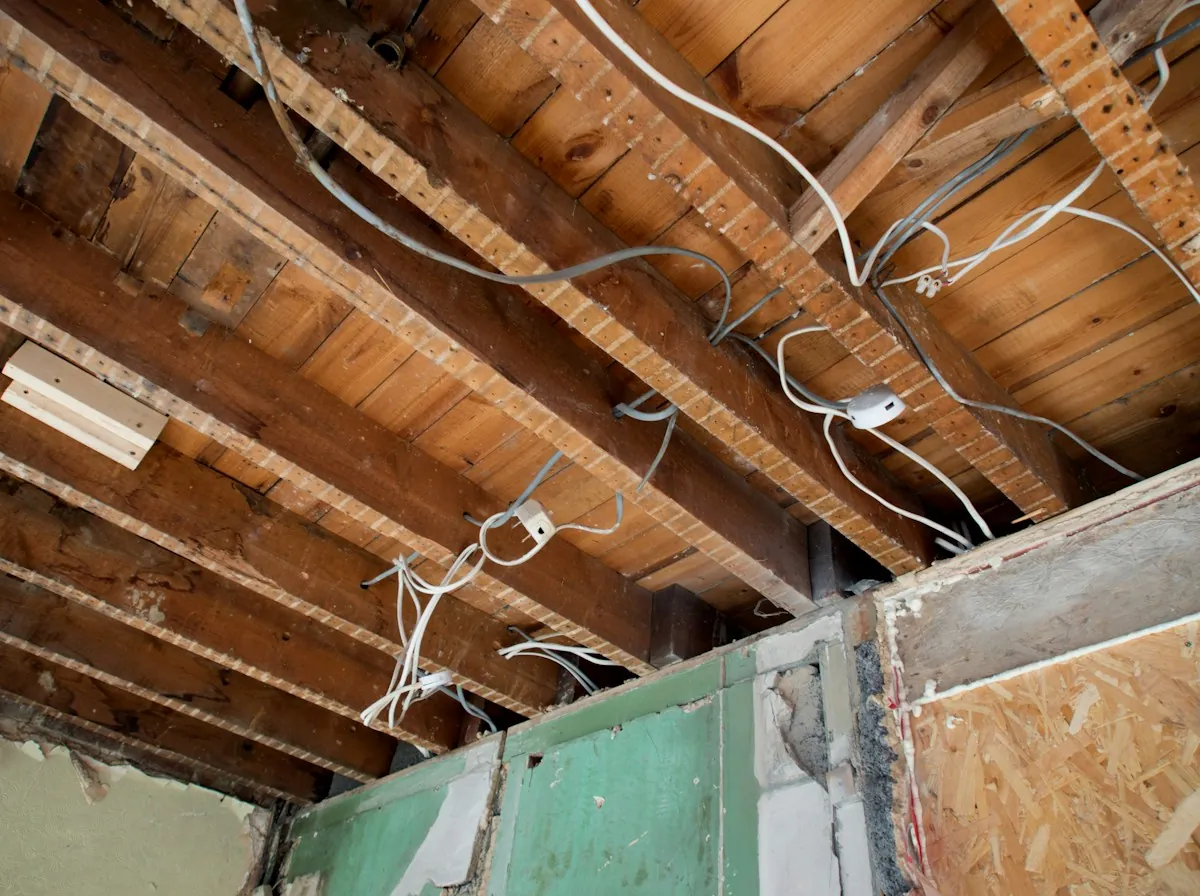
Water enters at a junction and travels along a rafter before it drops. On a shallow pitch that can be several feet. This is why the roof space is part of the survey and not an optional extra.
Telling us when it leaks. Only in driving rain, only in a thaw, or every time -- each of those narrows the search a long way before anybody goes up, and the search is what you are paying for.
Wet decking, a second story, work over an occupied unit, and sealant from a previous attempt that has to come off before anything can be done properly.
Low ground and open water do two things to a roof here. Damp that looks like a leak is sometimes rising or tracking from below, and establishing the direction of travel is the first job rather than an afterthought. And wind arrives off the water with nothing in the way, which finds the edge detail -- rake, drip edge, the first course -- before it finds anything else.
Including us. On repair work the checks are different from the ones people apply to a replacement, and cheaper to make.
New Jersey registers home improvement contractors rather than licensing roofers, and the number belongs on every advert and contract. The register is public. The wording is a tell as well: the code says not to call it a license, so a New Jersey roofer advertising their roofing 'license' has not read the rules closely.
'Repair roof' is not a scope. 'Rebuild step flashing to the chimney, replace two vent boots, re-lap the valley' is -- and it can be checked when it is finished, which is the point.
Ask before, not after. A repair aimed at a named cause can be stood behind; a patch aimed at a stain cannot, and a contractor who is vague about the cause will be vague about this too.
The first question here is which direction the water is coming from.
Close to open water the freeze is less reliable and the thaw more frequent, which produces repeated small melt-and-refreeze cycles rather than one big dam.
Wind uplift rather than ponding is the flat-roof risk this close to open water.
Wind off the water breaks seal lines, and a broken seal line is the most deceptive damage in roofing: the tab drops back flat and looks untouched, then leaks in the first driving rain, sometimes months later.
Salt-laden air off the water is hard on metal, so flashing here has a shorter life than the same detail three miles inland.
Tell us what the wind is doing.
Pre-war chimneys, and eaves with no ice barrier.
Flat roofs behind parapets. Access is the first problem.
Post-war and often overlaid, so the eaves are buried.
Steep pitch. Specific details fail, not the field.
Rear additions and garages, and their junctions.
Built as a set, so the street is a reliable guide.
The widest age spread. Age decides where to look.
The questions that decide this job, answered up front.
Usually not. Water enters at a junction, runs along a rafter or the top of the ceiling, and drops at the first low point it reaches. On a shallow pitch that can be several feet from the entry point, which is why the roof space gets walked as well as the roof.
Yes, and it is one of the most useful things you can tell us. A roof that leaks only in driving rain is usually failing at an upstand or a lap that is perfectly adequate under vertical water, and that narrows the search a long way before anybody goes up.
That is an ice dam, and it is the opposite of a rain leak. Heat escaping into the roof space melts snow on the upper roof; the meltwater refreezes at the cold eaves and dams; water then backs up behind it and goes in above the line the covering sheds from. It shows up during a thaw. The lasting fix is insulation and ventilation, not shingles.
Usually not. New Jersey treats repair or replacement of an existing roof covering on a DETACHED one- or two-family dwelling as ordinary maintenance under N.J.A.C. 5:23-2.7 -- no permit, no notice, no inspection. Attached houses, buildings with three or more units and anything structural are the exceptions, and we tell you which you are at the survey.
Look away from the failure. If the covering across the rest of the slope still lies flat, still holds its granules and is not brittle, the roof has life in it and the repair is the right job. If the slope is generally spent, a repair is money spent twice. Then check the layer count: two coverings is the practical ceiling.
The roof space walked as well as the roof, before any price. The cause named in writing, not just the work.