Roof Repair in Roselle Park from $150. New Jersey repair prices, the cause found before the patch, and an honest answer when the cause is not the roof. Free inspection and a written quote.
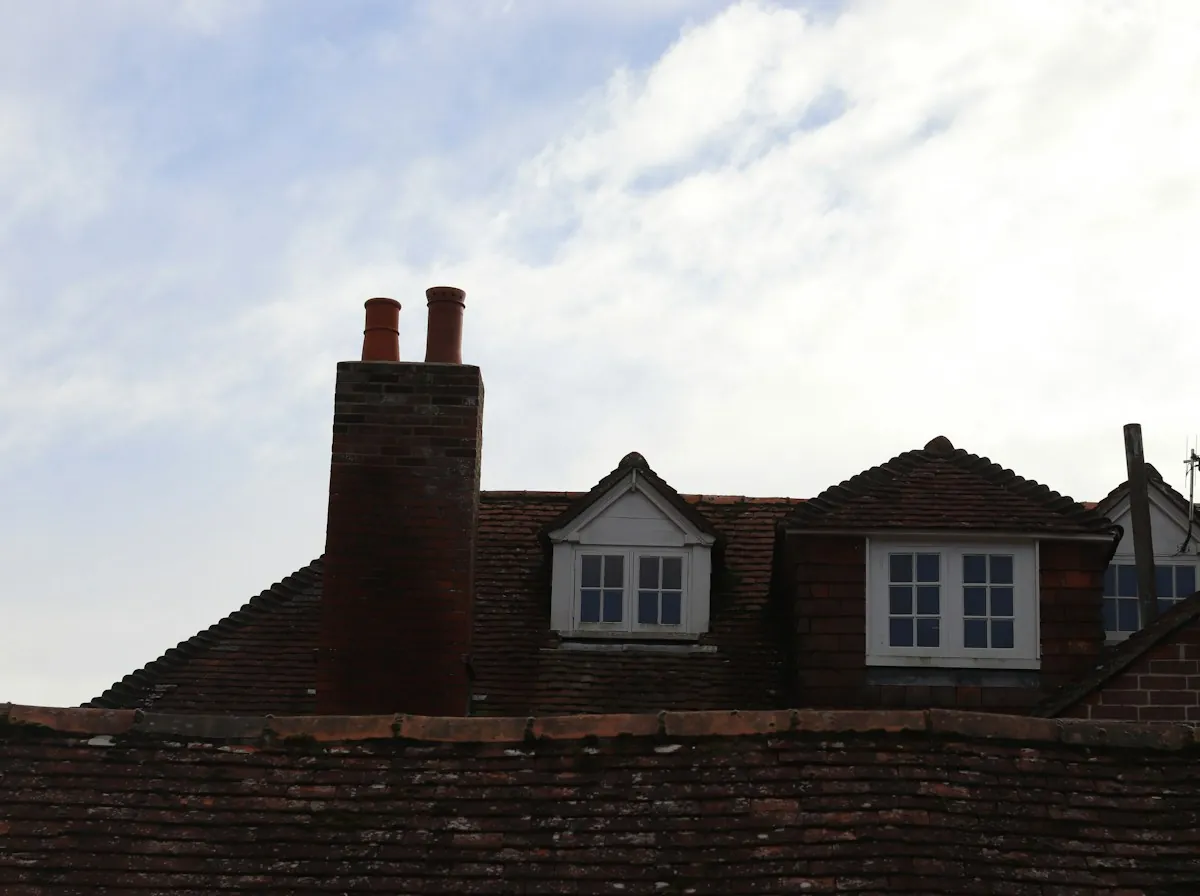
Steep pitches shed water well, which means a Roselle Park leak is usually a specific failed detail rather than a general problem -- a valley, a chimney, a vent boot. It also means staging rather than walking the roof, and that is a real line on the quote rather than padding.
Roof repairs in New Jersey run $350 to $1,800 for most jobs, with minor work from $150 to $600. Those are state figures. The reason the spread is that wide has almost nothing to do with the size of the hole and everything to do with whether anybody worked out what caused it.


Most New Jersey roof repairs land between $350 and $1,800, with minor work from $150 to $600. New Jersey sits above the national average on labor, so an online calculator will read low here. What moves a repair price is not the size of the hole, it is whether anybody established what caused it. Steeper pitch means staging rather than walking the roof, and that is genuine labor rather than padding. Against that, steep roofs shed well, so the repair itself is more often a single specific detail than a general problem -- which keeps the scope small.
Calling at the first stain, an accessible roof, and a cause that is a single failed detail rather than a pattern. A straightforward flashing or a perished vent boot is at the bottom of every range on this page.
A leak that has already been patched, because now there is somebody else's work to undo. A steep roof needing staging. Wet decking. And a cause in the roof space rather than on the covering, which is a larger conversation.
If the same slope has been patched twice, we will say so rather than selling a third patch. A repair is worth its price when the covering around it still has life in it, and not otherwise.
A small Union County borough west of the city, built out largely in the first half of the twentieth century.
Close-set single-family housing on a tight grid, with steeper pitches and deeper eaves than the post-war stock further south.
Steeper pitch changes the repair rather than the price. A steep roof sheds well, so leaks here are less often about standing water and more often about a specific failed detail -- a valley, a chimney, a vent. It also means staging rather than simply walking the roof, and that does belong in the quote.
A large share of the work on this site is second-time work, and the reason is almost always diagnosis rather than workmanship.
It enters at a junction -- a flashing, an upstand, a penetration, a lap -- then runs along the top of a rafter until it meets a low point and falls. On a shallow pitch that can be several feet from where it got in, so the wet ceiling is evidence of where the water ended up, not where it started.
Leaks in driving rain but not in vertical rain: an upstand or a lap. Leaks every time it rains: something genuinely open. Leaks during a thaw with no rain at all: an ice dam, and the covering above may be perfectly sound.
If the cause is heat escaping into the roof space, the fix is air sealing, insulation and ventilation. We will say so and write it down, rather than selling you a repair that buys one winter and comes back.
Deeper eaves make ice dams worse, not better.
On a steep roof the valley is the usual culprit.
There is less low slope here than anywhere else covered on this site, so when it appears it is a small porch or bay roof -- and a small roof has the worst ratio of edge detail to field.
Steeper pitch means shingle lasts longer here than on the shallower post-war roofs, because water spends less time on it.
A chimney on a steep roof collects more water against its upslope face than one on a shallow roof, which is why the back gutter behind the stack is the detail that fails here.
A steep roof is not a roof to put a temporary cover on in the dark in the wet.
Pre-war chimneys, and eaves with no ice barrier.
Flat roofs behind parapets. Access is the first problem.
Low ground, open water. Which way is the water going?
Post-war and often overlaid, so the eaves are buried.
Rear additions and garages, and their junctions.
Built as a set, so the street is a reliable guide.
The widest age spread. Age decides where to look.
The questions that decide this job, answered up front.
Usually close, rarely exactly. Recent asphalt is widely available; older profiles and discontinued colors are not, and a new shingle never matches one that has had ten winters on it. Where a perfect match is impossible we take material from a low-visibility slope and put the near match there.
As long as the covering around it, if the repair was aimed at the right cause. That is the whole argument of this site: a good repair in a finished roof is money spent twice, and a good repair aimed at the wrong place fails whatever it cost.
It is Florida Building Code, Existing Building, section 706.1.1: not more than 25 per cent of a roof area repaired, replaced or recovered in any twelve-month period unless the whole system is brought up to current code. It gets quoted nationally because it sounds universal. It is not New Jersey law, and it is not what decides whether your roof should be repaired.
Look away from the failure. If the covering across the rest of the slope still lies flat, still holds its granules and is not brittle, the roof has life in it and the repair is the right job. If the slope is generally spent, a repair is money spent twice. Then check the layer count: two coverings is the practical ceiling.
No. The inspection is free, it covers the roof space as well as the roof, the written quote is free, and neither carries an obligation. The written cause is yours to keep even if you use somebody else. What we will not do is give you a price at the curb without going up.
The roof space walked as well as the roof, before any price. The cause named in writing, not just the work.