Roof Leak Repair in Midtown from $400. $400 to $1,400 for most leaks, and the entry point is rarely above the stain. Free inspection and a written quote.
A leak here has usually traveled further than anywhere else on this site. Water entering at a parapet upstand runs behind the wall head and shows up on a top-floor ceiling well away from the point of entry, and in a commercial building it may be reported days after it started.
Most leak repairs in New Jersey land between $400 and $1,400, and a small isolated one is $400 to $900. Where that money goes wrong is on the diagnosis rather than the price: a patch put where the ceiling is wet is a patch in the wrong place more often than not.


Leak repairs in New Jersey run $400 to $1,400 for most jobs, and a small isolated one is $400 to $900. The number that matters more than the price is how many times this leak has been repaired already: a second attempt is usually a diagnosis problem rather than a workmanship one. Expect access to appear as a line. A roof reached through an occupied unit, or a frontage on a busy street, is time before any work starts -- and on a parapet roof the outlet and coping are part of the job whether or not they are what you called about.
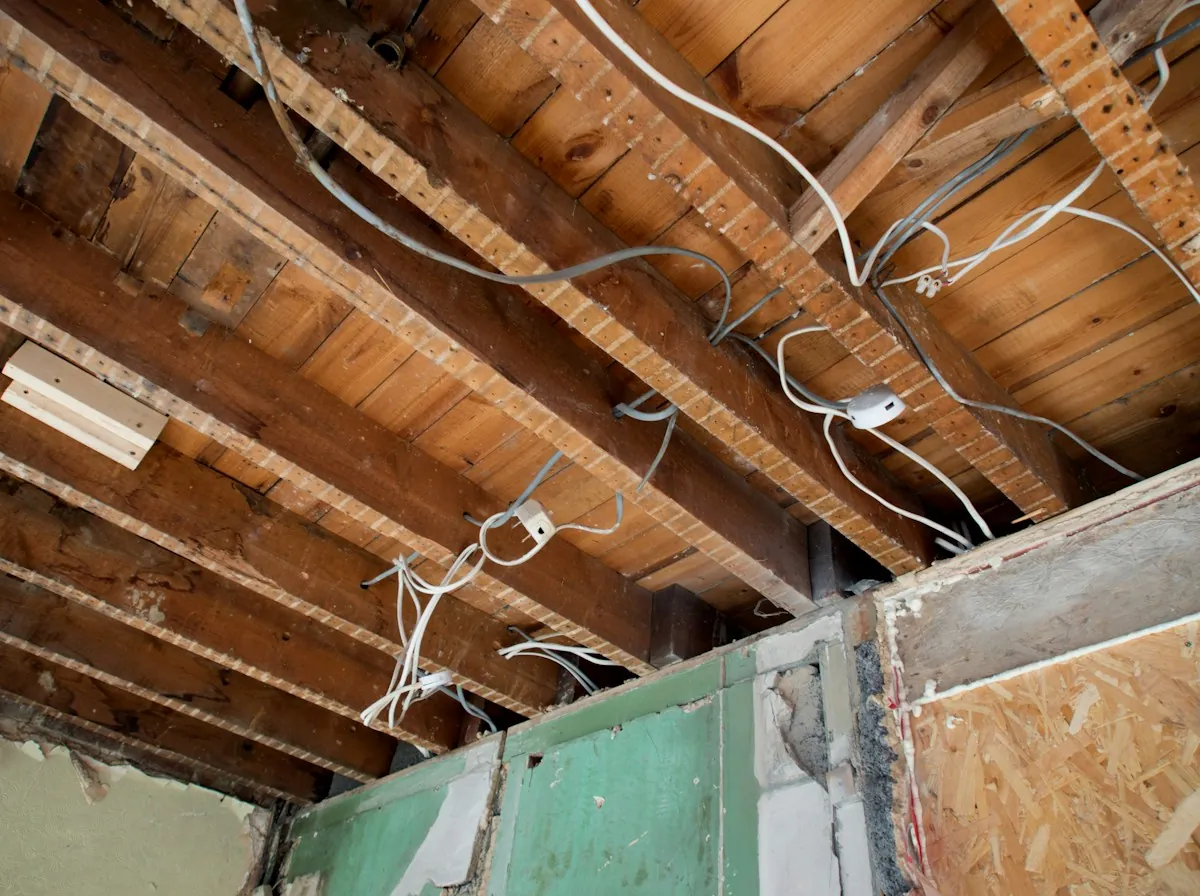
Water enters at a junction and travels along a rafter before it drops. On a shallow pitch that can be several feet. This is why the roof space is part of the survey and not an optional extra.
Telling us when it leaks. Only in driving rain, only in a thaw, or every time -- each of those narrows the search a long way before anybody goes up, and the search is what you are paying for.
Wet decking, a second story, work over an occupied unit, and sealant from a previous attempt that has to come off before anything can be done properly.
Parapets are the Midtown story. A building with a flat roof behind a street-facing parapet fails at the coping and the upstand, not in the field, and the water appears inside on the top floor a long way from where it entered. Access is the other constraint: a roof reached only through an occupied unit changes how the work has to be arranged.
Including us. On repair work the checks are different from the ones people apply to a replacement, and cheaper to make.
New Jersey registers home improvement contractors rather than licensing roofers, and the number belongs on every advert and contract. The register is public. The wording is a tell as well: the code says not to call it a license, so a New Jersey roofer advertising their roofing 'license' has not read the rules closely.
'Repair roof' is not a scope. 'Rebuild step flashing to the chimney, replace two vent boots, re-lap the valley' is -- and it can be checked when it is finished, which is the point.
Ask before, not after. A repair aimed at a named cause can be stood behind; a patch aimed at a stain cannot, and a contractor who is vague about the cause will be vague about this too.
Above a shop or an office the leak is reported by whoever is underneath it, which is rarely the person who owns the roof.
On a flat roof behind a parapet an ice dam behaves differently: the ice forms at the outlet rather than at an eaves line, and once the outlet is blocked the whole roof holds meltwater instead of shedding it.
The whole roof is flat on much of this stock, and it sits behind a parapet with internal drainage.
Where there is a pitched slope at all here it is usually a small street-facing section in front of a flat roof, and the interesting part is the junction between them.
On commercial and mixed-use buildings the penetration through a flat roof is usually not a chimney but a flue, a duct or a vent, and each needs a proper curb and a flashing worked into the membrane.
Above a shop or an office an emergency has two parts, and the roof is the second one.
Pre-war chimneys, and eaves with no ice barrier.
Low ground, open water. Which way is the water going?
Post-war and often overlaid, so the eaves are buried.
Steep pitch. Specific details fail, not the field.
Rear additions and garages, and their junctions.
Built as a set, so the street is a reliable guide.
The widest age spread. Age decides where to look.
The questions that decide this job, answered up front.
Usually not. Water enters at a junction, runs along a rafter or the top of the ceiling, and drops at the first low point it reaches. On a shallow pitch that can be several feet from the entry point, which is why the roof space gets walked as well as the roof.
Yes, and it is one of the most useful things you can tell us. A roof that leaks only in driving rain is usually failing at an upstand or a lap that is perfectly adequate under vertical water, and that narrows the search a long way before anybody goes up.
Almost certainly because the repair went where the ceiling was wet rather than where the water entered. Water gets in at a junction, runs along a rafter and drops at the first low point, which on a shallow pitch can be several feet away. That is why the roof space gets inspected here before anything is quoted -- the underside of the deck shows the direction of travel.
That is an ice dam, and it is the opposite of a rain leak. Heat escaping into the roof space melts snow on the upper roof; the meltwater refreezes at the cold eaves and dams; water then backs up behind it and goes in above the line the covering sheds from. It shows up during a thaw. The lasting fix is insulation and ventilation, not shingles.
It is Florida Building Code, Existing Building, section 706.1.1: not more than 25 per cent of a roof area repaired, replaced or recovered in any twelve-month period unless the whole system is brought up to current code. It gets quoted nationally because it sounds universal. It is not New Jersey law, and it is not what decides whether your roof should be repaired.
The roof space walked as well as the roof, before any price. The cause named in writing, not just the work.