Shingle Roof Repair in Union from $150. Wind damage is nearly invisible from the ground, and the eaves are where winter does its work. Free inspection and a written quote.
The shaded northern slope is the one to look at first on these plots, because mature planting around suburban houses keeps it damp for longer after every thaw. Shingle that never fully dries grows algae, loses granules faster and ages visibly ahead of the sunlit side of the same roof.
Two things fail on shingle in this climate and neither is the middle of the slope. Wind gets under a course and breaks the seal line, which leaves the tab lying flat again and looking untouched -- then it leaks in the first driving rain, sometimes months later, when nobody connects the two events.


Shingle repairs run $350 to $1,800 for most jobs and from $150 for minor work. The two failures worth knowing about here are both cheap now and expensive later: a wind-broken seal line, and the first three feet at the eaves. The variable here is which roof. A repair to the house is priced normally; a repair to an attached garage or a rear addition often turns out to involve the deck as well, because nobody goes in there in winter and a leak runs unnoticed for weeks.
The tab creases at the seal line and drops back flat. It looks untouched and then leaks in the first driving rain, sometimes months later. Found by hand, not from the sidewalk, and cheap when it is found.
Many roofs here predate the ice-barrier detail. A repair in the first three feet on a roof with no membrane beneath is a holding measure, and we price it as one rather than calling it a fix.
Asphalt tends to finish across a whole slope at once rather than in patches. A bald section usually means that slope is done, and a patch on a finished slope is money spent twice.
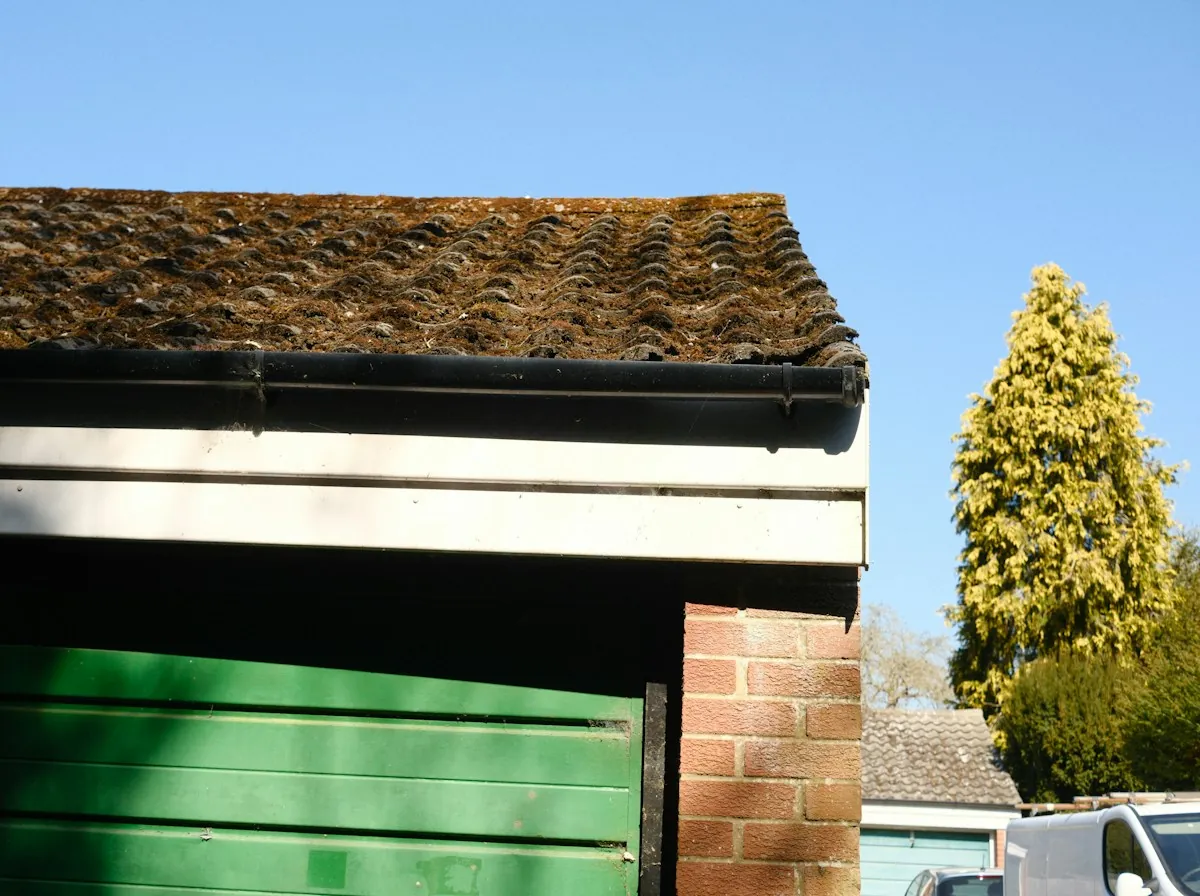
Rear additions and attached garages are the recurring problem here, because the junction where an addition roof meets the original one is where water gets in. A garage roof is also the least-inspected roof on any property: it is usually the oldest covering on the plot and nobody notices until something stored under it is ruined.
Including us. On repair work the checks are different from the ones people apply to a replacement, and cheaper to make.
New Jersey registers home improvement contractors rather than licensing roofers, and the number belongs on every advert and contract. The register is public. The wording is a tell as well: the code says not to call it a license, so a New Jersey roofer advertising their roofing 'license' has not read the rules closely.
'Repair roof' is not a scope. 'Rebuild step flashing to the chimney, replace two vent boots, re-lap the valley' is -- and it can be checked when it is finished, which is the point.
Ask before, not after. A repair aimed at a named cause can be stood behind; a patch aimed at a stain cannot, and a contractor who is vague about the cause will be vague about this too.
Two roofs per property is normal here and the second one is the problem.
The classic Union ice dam is over an attached garage or a rear addition, because those roofs sit next to heated space on one side and unheated space below.
The junction between an addition and the original house is where most Union leaks start.
The flat roof in Union is typically over an attached garage, and it has a particular problem: nobody goes in there in winter, so a leak runs for weeks before it is noticed.
Where a chimney sits at the junction of the house and an addition, there are two roofs and a masonry stack all meeting in one place.
If the water is coming into a garage or an addition rather than the house, say so -- it changes the urgency and what we bring.
Pre-war chimneys, and eaves with no ice barrier.
Flat roofs behind parapets. Access is the first problem.
Low ground, open water. Which way is the water going?
Post-war and often overlaid, so the eaves are buried.
Steep pitch. Specific details fail, not the field.
Built as a set, so the street is a reliable guide.
The widest age spread. Age decides where to look.
The questions that decide this job, answered up front.
Yes, and it is a cheap check. Wind damage is close to invisible from the ground: the tab creases at the seal line and drops back flat. It leaks in the first driving rain afterwards, which can be months later when nobody connects the two events.
Because the first three feet are where winter works. Freeze and thaw drives water back up under the courses at the eaves, which is what an ice barrier membrane exists to stop -- and a lot of roofs here were built before that detail or had it buried under an overlay.
Look away from the failure. If the covering across the rest of the slope still lies flat, still holds its granules and is not brittle, the roof has life in it and the repair is the right job. If the slope is generally spent, a repair is money spent twice. Then check the layer count: two coverings is the practical ceiling.
Ask for the New Jersey HIC registration number and check it on the public register. Then ask whether they will look in the roof space, and whether the quote will name the cause rather than just the work. Those three questions cost nothing and they separate most of a shortlist immediately.
Most New Jersey roof repairs run $350 to $1,800, with minor work from $150 to $600. A leak is usually $400 to $1,400 and a small isolated one $400 to $900. Flashing is $300 to $900, or $300 to $1,200 around a chimney, vent or skylight. New Jersey runs above the national average on labor, which is why online calculators read low.
The roof space walked as well as the roof, before any price. The cause named in writing, not just the work.