Chimney Flashing Repair in Rahway from $300. $300 to $1,200 around a chimney, vent or skylight -- and the commonest leak on this housing stock. Free inspection and a written quote.
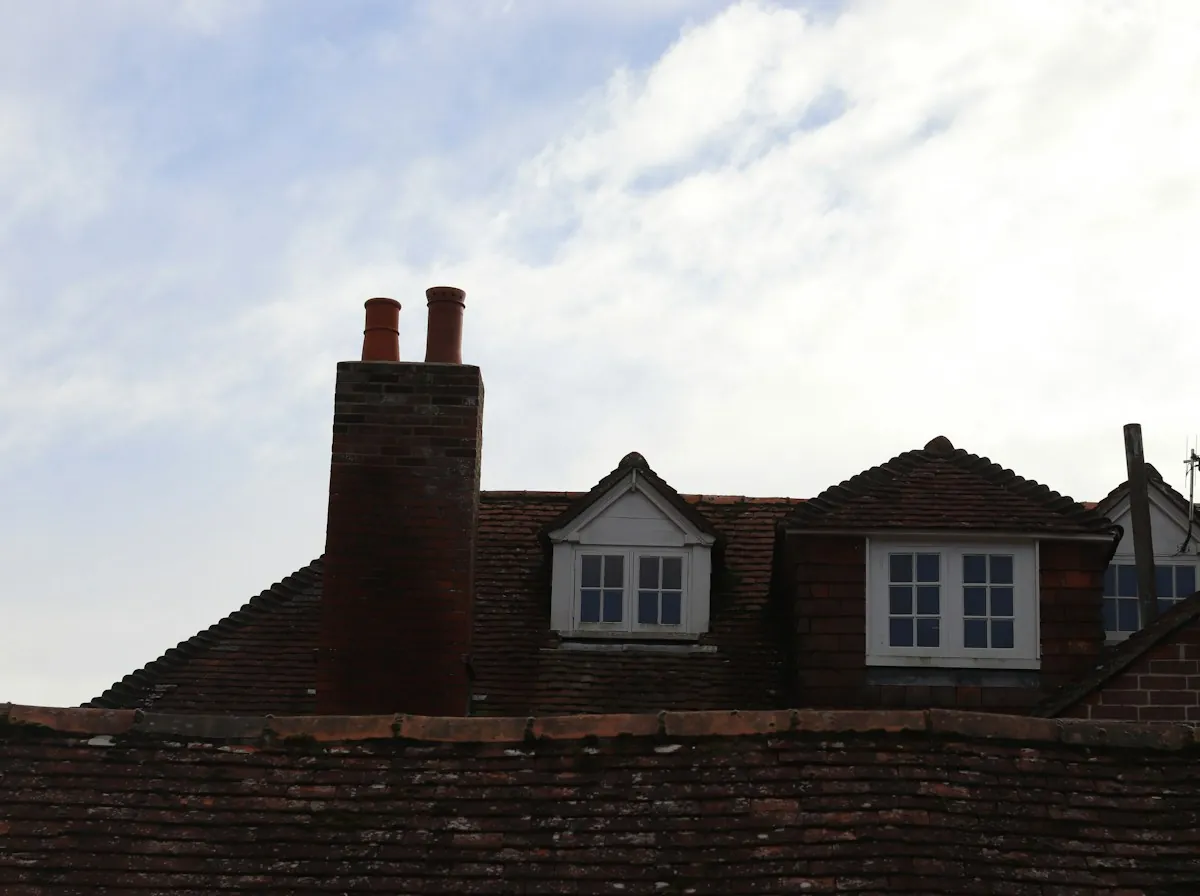
The older the chimney the more likely the actual fault is masonry rather than metal -- a cracked crown, open joints, or pointing that has gone. We will tell you when that is what is letting water in, because flashing over failing masonry is work that looks like a repair and is not one.
Standard roof flashing repairs run $300 to $900 in New Jersey, and flashing around a chimney, vent or skylight is $300 to $1,200. On pre-war housing with masonry chimneys this is the single most common leak there is, because a chimney is a structure moving independently of the roof it passes through.


Standard roof flashing repairs are $300 to $900 in New Jersey; flashing around a chimney, vent or skylight runs $300 to $1,200. On pre-war housing with masonry stacks this is the most common leak there is, because a chimney moves independently of the roof it passes through. Age is the price driver here because the stock spans so much of it. Board sheathing on older center housing adds work that newer development does not have, and a quote that does not mention the deck has not established which one you own.
Sealant over a failed flashing is a lid on the problem. It looks like work, costs less and lasts a season. Rebuilding the step and counter-flashing costs more and ends it.
A stack in a valley or at a junction between two roofs. A back gutter that was never installed. And masonry that has to be made good before metal can be let into it.
A cracked crown, a failed liner or open pointing are masonry. If that is what is letting water in we will tell you, because flashing over failing masonry is work that looks like a repair and is not one.
The age spread means the first question in Rahway is simply how old the roof is, because it decides what is underneath. Older stock near the center can have board sheathing and no ice barrier; newer development has neither problem and fails at penetrations and details instead.
Worth knowing before you start ringing round, and worth acting on before the first freeze rather than after it.
Northern roofs do not fail steadily. They fail in the freeze and in the first thaw after it, which means every roofer in Union County takes the same calls in the same two weeks. A roof that could have been surveyed comfortably in October becomes a queue in January, and the repair that could have been planned becomes an emergency.
Start with the age of the roof, because in Rahway that varies more than anywhere else covered here.
Older Rahway houses are the ones to worry about, and for a specific reason: board sheathing with gaps, no ice barrier, and a roof space that was never air-sealed.
Age decides where to look.
Newer development near the station has larger flat areas built properly with real fall, and those genuinely do fail at the membrane or a detail.
On the older housing the deck matters as much as the covering.
Two different emergencies depending on the building.
Pre-war chimneys, and eaves with no ice barrier.
Flat roofs behind parapets. Access is the first problem.
Low ground, open water. Which way is the water going?
Post-war and often overlaid, so the eaves are buried.
Steep pitch. Specific details fail, not the field.
Rear additions and garages, and their junctions.
Built as a set, so the street is a reliable guide.
The questions that decide this job, answered up front.
Because sealant is not a flashing. A chimney moves independently of the roof it passes through, so anything relying on adhesion across that joint fails within a season or two. The repair that lasts rebuilds the step flashing and lets counter-flashing into the masonry joint.
From where the damp is and what the masonry looks like. A cracked crown, open pointing or a failed liner put water inside the stack and it shows up lower down, often in a different pattern from a flashing leak. We will tell you which one you have, and masonry is not our trade.
No. The inspection is free, it covers the roof space as well as the roof, the written quote is free, and neither carries an obligation. The written cause is yours to keep even if you use somebody else. What we will not do is give you a price at the curb without going up.
Most New Jersey roof repairs run $350 to $1,800, with minor work from $150 to $600. A leak is usually $400 to $1,400 and a small isolated one $400 to $900. Flashing is $300 to $900, or $300 to $1,200 around a chimney, vent or skylight. New Jersey runs above the national average on labor, which is why online calculators read low.
That is an ice dam, and it is the opposite of a rain leak. Heat escaping into the roof space melts snow on the upper roof; the meltwater refreezes at the cold eaves and dams; water then backs up behind it and goes in above the line the covering sheds from. It shows up during a thaw. The lasting fix is insulation and ventilation, not shingles.
The roof space walked as well as the roof, before any price. The cause named in writing, not just the work.